If your skincare routine doesn’t include antioxidants, you may be missing one of the most effective ways to protect your skin from everyday environmental stress.
Antioxidants aren’t just trendy skincare ingredients. They help neutralize free radicals, calm visible redness, brighten dull-looking skin, and reduce the appearance of premature aging. While vitamin C usually gets most of the attention, olive extract—particularly its antioxidant compounds hydroxytyrosol and oleuropein—offers another powerful option.
Below, we’ll explain what antioxidants do, introduce five of the best antioxidants for skin, and explore why olive-derived antioxidants deserve more attention in your skincare routine.
What Do Antioxidants Actually Do for the Skin?
- Reduce inflammation and redness
- Prevent fine lines and wrinkles
- Brighten dull skin and fade dark spots
- Support collagen production
- Protect against long-term sun and pollution damage
5 Best Antioxidants for Skin
1. Vitamin C (Ascorbic Acid)
2. Olive Extract (Hydroxytyrosol and Oleuropein)
Olive-derived antioxidants can be particularly relevant for sensitive or easily irritated skin because they provide antioxidant support without relying on exfoliation or highly acidic formulations.
If your skin is sensitive, oily, or prone to visible redness, consider an antioxidant serum for sensitive skin formulated with hydroxytyrosol-rich olive extracts.
3. Vitamin E (Tocopherol)
4. Niacinamide (Vitamin B3)
5. Green Tea Extract (EGCG)
Top 5 Antioxidant-Rich Foods for Healthy Skin
- Berries (blueberries, strawberries): Packed with vitamin C and anthocyanins to fight inflammation and support collagen.
- Dark leafy greens (spinach, kale): Contain beta-carotene and lutein, which protect skin from oxidative stress.
- Tomatoes: Rich in lycopene, an antioxidant that protects against UV damage.
- Green tea: Drinking it regularly can improve skin hydration and reduce redness, thanks to EGCG.
-
Extra virgin olive oil: Not only great topically, but also internally. Its polyphenols (like hydroxytyrosol) support cardiovascular and skin health.
Antioxidant Skincare Tips (and Life Tips Too)
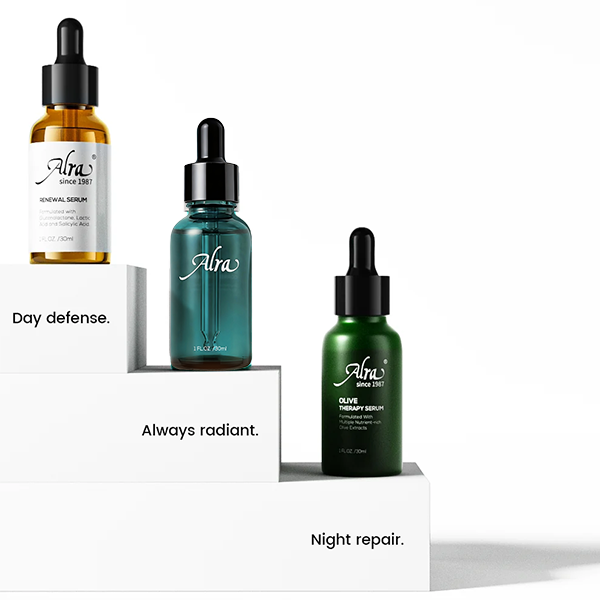
- Use antioxidants in the morning and night. They protect during the day and repair while you sleep.
- Always pair them with sunscreen. Antioxidants boost your SPF’s effectiveness.
- Don’t wait until damage shows. Prevention is easier than reversal. Start using antioxidant serums in your 20s or early 30s.
- Consistency matters. You won’t see instant results, but long-term use reduces signs of aging and strengthens your skin over time.
-
Eat well. What you apply on the outside works better when your diet supports it.
Why Alra Antioxidant Serums Stand Out
Final Thoughts
Antioxidants are more than a skincare trend. They form an important part of the skin’s daily defense against free radicals and environmental stress.
Vitamin C, olive extract, vitamin E, niacinamide, and green tea are five of the best antioxidants for skin, but each offers different advantages. Vitamin C is widely used for brightening, while niacinamide and green tea are popular for oily or acne-prone skin. Vitamin E supports dry skin, and olive-derived hydroxytyrosol combines strong antioxidant activity with benefits for sensitive and stressed-looking skin.
When choosing an antioxidant product, consider your skin concerns, the complete formulation, and how consistently you can use it. For people looking for a gentle antioxidant option for sensitive or acne-prone skin, olive-derived hydroxytyrosol may be especially worth exploring.
Frequently Asked Questions
What are the best antioxidants for skin?
Vitamin C, olive-derived hydroxytyrosol, vitamin E, niacinamide, and green tea extract are among the best-known antioxidants used in skincare. The best choice depends on your skin type, concerns, and the complete formulation of the product.
What do antioxidants do for the skin?
Antioxidants help neutralize free radicals caused by UV exposure, pollution, and other environmental stressors. They can help protect healthy-looking collagen, calm visible redness, brighten dull-looking skin, and reduce the appearance of premature aging.
Which antioxidant is best for sensitive skin?
Olive-derived hydroxytyrosol, niacinamide, green tea extract, and vitamin E can be suitable for sensitive skin when incorporated into gentle formulations. Always review the complete ingredient list and patch-test a new product before regular use.
Can I use more than one antioxidant in my skincare routine?
Yes. Different antioxidants can complement one another. For example, vitamin C and vitamin E are often used together, while hydroxytyrosol can be added to a routine focused on sensitivity, visible redness, or environmental stress. Introduce new products gradually if your skin is reactive.
Should I use an antioxidant serum in the morning or at night?
Many antioxidant serums can be used in the morning, evening, or both. When using an antioxidant serum during the day, follow it with a broad-spectrum sunscreen.