Skincare After Chemotherapy:
What Cancer Patients Need to Know
A clinically informed guide to protecting, soothing, and restoring your skin during and after cancer treatment.
Chemotherapy disrupts the skin barrier, causing dryness, itching, redness, and heightened sensitivity. Cancer patients need fragrance-free, alcohol-free, and hormone-safe skincare that won't further irritate compromised skin. Alra Skin Care — born from oncology in 1982 and trusted by over 200 U.S. cancer centers — offers a clinically tested product range specifically designed for chemo and post-chemo skin care.
How Chemotherapy Affects Your Skin
Cancer treatment saves lives — but it takes a toll on the body's largest organ. Chemotherapy drugs are designed to target rapidly dividing cells, and unfortunately, skin cells divide quickly too. This is why so many cancer patients experience significant skin changes during and after treatment.
Understanding why these changes happen helps patients choose the right skincare products and avoid common mistakes that can worsen symptoms.
| Skin Side Effect | Why It Happens | Affected Area |
|---|---|---|
| Extreme dryness & flaking | Chemo disrupts natural lipid production and weakens the skin barrier | Full body, especially hands, feet, face |
| Redness & inflammation | Inflammatory cytokine response triggered by treatment | Face, neck, radiation sites |
| Itching & sensitivity | Nerve endings become hypersensitive; histamine release increases | Widespread |
| Scalp irritation & hair loss | Hair follicle cells are rapidly dividing — chemo disrupts their cycle | Scalp |
| Radiation dermatitis | Ionizing radiation damages skin cells directly at treatment site | Radiation field area |
| Hyperpigmentation / dark spots | Some chemo drugs increase melanin production as a side effect | Face, hands, radiation sites |
Conventional moisturizers, shampoos, and deodorants frequently contain fragrance compounds, alcohol, parabens, aluminum, and sulfates — all of which can severely irritate compromised chemo skin or interfere with treatment. Always choose products specifically formulated for oncology care.
What to Look for in Chemotherapy Skincare
Not all "gentle" or "natural" products are appropriate for cancer patients. Here are the key criteria dermatologists and oncology nurses use when recommending skincare during and after chemotherapy:
- Fragrance-free — Synthetic and natural fragrances are the most common contact irritants. Even products labeled "natural scent" can trigger reactions in chemo-sensitized skin.
- Alcohol-free — Alcohol strips the skin barrier and accelerates moisture loss, which is already severely impaired during treatment.
- Sulfate-free — Sulfates in shampoos and soaps create foam but can strip protective oils from an already vulnerable scalp and skin.
- Free of aluminum compounds — Especially critical near radiation treatment sites; aluminum-based antiperspirants can cause burns under radiation.
- Hormone-safe / paraben-free — Particularly important for hormone-sensitive cancers such as breast cancer.
- Clinically tested for oncology — Look for products with documented hospital use or oncologist recommendations — not just general "sensitive skin" marketing claims.
Alra's Clinically Trusted Products for Chemo Skin
Alra Skin Care was founded in 1982 when chemical engineer Henry Ott partnered with a radiation oncologist at Cedars-Sinai Medical Center to create a healing lotion for his wife Sarah, who was undergoing radiation treatment for breast cancer. That original mission — clinical efficacy first, comfort always — still drives every Alra formula today.
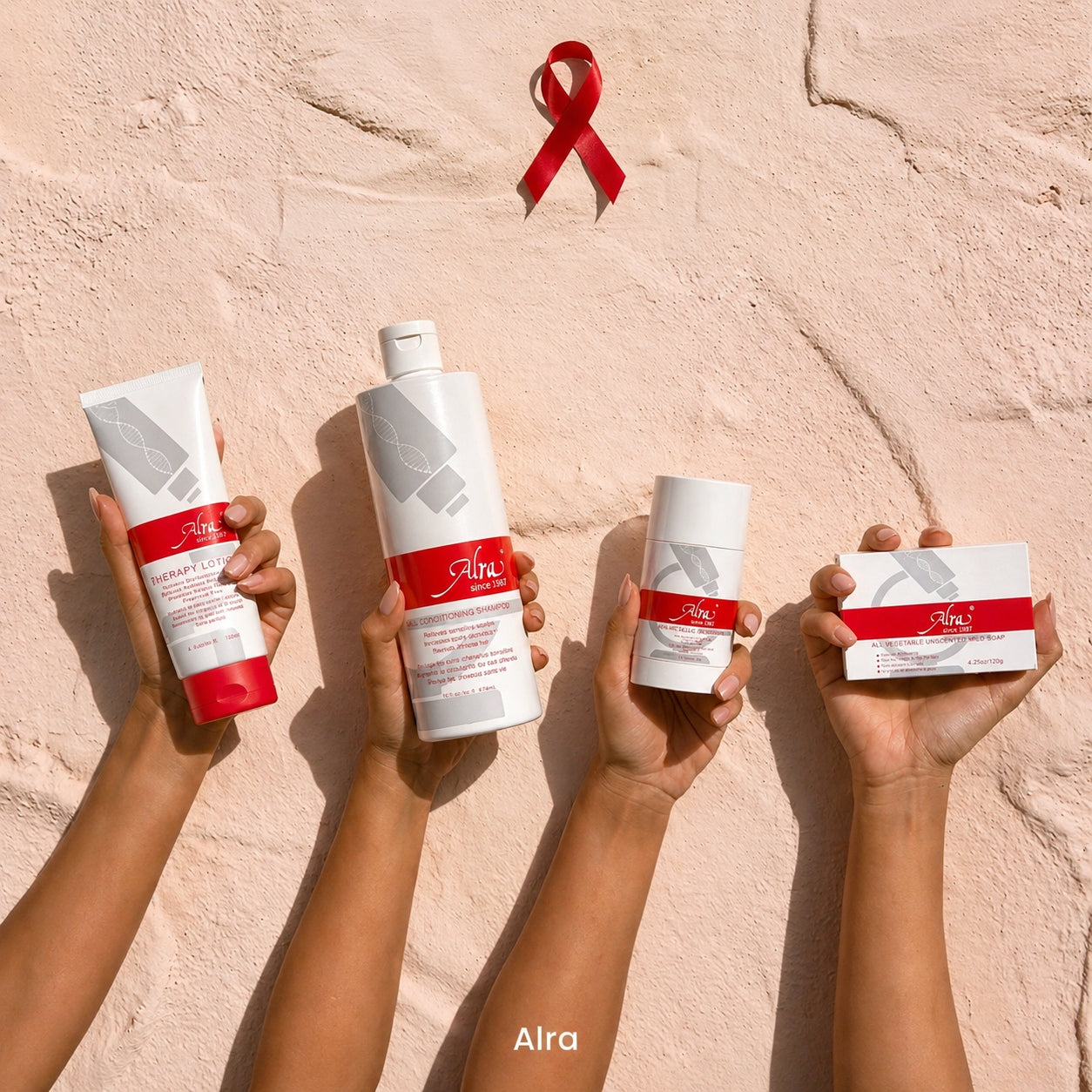
Alra Therapy Lotion
The original Alra product — developed specifically for radiation therapy skin reactions. Water-soluble and easy to rinse. Recommended by the University of Michigan Cancer Center and sold on-site at their hospital pharmacy.
Best for: Post-radiation dryness, daily whole-body moisture, barrier repair after chemo.
Shop Therapy Lotion →Mild Conditioning Shampoo
Formulated for dry, itchy, and sensitized scalps — a near-universal complaint among patients undergoing chemotherapy. Recommended by Compass Oncology for sensitive scalp care during treatment.
Best for: Scalp dryness and irritation, sensitive scalp during active treatment, post-chemo scalp comfort.
Shop Shampoo →Non-Metallic Deodorant
Standard antiperspirants contain aluminum — a significant concern near radiation treatment sites. Alra's non-metallic formula provides effective odor control without any ingredients that could cause burns or interfere with radiation therapy.
Officially listed in the Northwestern University Cancer Center Patient Handbook as recommended for radiation patients.
Shop Deodorant →All Vegetable Unscented Mild Soap
Ultra-mild, moisturizing soap trusted by oncology nurses for patients with burns, raw areas, or highly sensitized skin. Non-foaming formula avoids the stripping effect of conventional cleansers.
Best for: Daily cleansing during active treatment, sensitive or compromised skin areas.
Shop Mild Soap →Chemo Care Kit
The complete chemo skincare system — everything a patient needs in one thoughtfully bundled kit. Ideal as a gift for a loved one in treatment or as a practical starter set for newly diagnosed patients.
Rated 4.7 stars from over 1,000 verified reviews.
Shop Chemo Care Kit →Trusted by America's Leading Cancer Centers
As of 2024, Alra is used in over 304 hospitals, pharmacies, and medical distributors across the United States. Over 70% of its partnerships are with healthcare institutions.
A Daily Skincare Routine for Chemo Patients
Consistency is key. A simple, gentle routine used daily provides far more benefit than complex skincare applied sporadically. Here is a routine built entirely around Alra products:
Morning: Gentle Cleanse
Use Alra Mild Soap with lukewarm (not hot) water. Pat dry with a soft cloth — never rub. Hot water accelerates moisture loss in already-dry skin.
Morning: Apply Therapy Lotion While Skin Is Still Damp
Apply Alra Therapy Lotion within 3 minutes of bathing to lock in moisture. Focus on areas of dryness, tightness, or radiation treatment sites. The aloe-collagen formula absorbs quickly and won't leave a greasy residue.
Morning: Non-Metallic Deodorant
Apply Alra Non-Metallic Deodorant to clean underarm skin. This is especially important if you are receiving radiation to the chest or axillary region — never use aluminum-based antiperspirants in these areas.
Shower: Scalp and Hair Care
Use Alra Mild Shampoo on a sensitized or recovering scalp. Massage gently with fingertips (not nails), rinse with cool water. Its sulfate-free, fragrance-free formula cleanses without stripping the scalp's already compromised moisture barrier.
Evening: Reapply Therapy Lotion Before Bed
Apply a generous layer of Alra Therapy Lotion to dry areas before sleep. Overnight is when the skin does most of its repair work — keeping the barrier well-hydrated during this window significantly accelerates recovery.
As Needed: Reapply Lotion Throughout the Day
Chemo skin loses moisture rapidly. Keep Therapy Lotion in a travel size in your bag and reapply to hands, face, and any dry areas as needed — especially after washing hands.
Ingredients to Avoid During Chemotherapy
Reading ingredient labels is essential for patients in active treatment. The following ingredients are commonly found in mainstream skincare products and should be avoided during chemotherapy:
- Fragrance / Parfum — A catch-all term hiding hundreds of potential irritants and allergens.
- Aluminum compounds (aluminum chlorohydrate, aluminum zirconium) — Used in antiperspirants; dangerous near radiation sites.
- Sodium lauryl sulfate (SLS) & SLES — Foaming agents that strip the skin barrier.
- Parabens (methylparaben, propylparaben) — Potential endocrine disruptors; especially concerning for hormone-sensitive cancers.
- Alcohol (SD alcohol, denatured alcohol) — Drying and irritating on sensitized skin.
- Retinoids (during treatment) — Can increase skin sensitivity and photosensitivity, compounding radiation effects.
- Strong exfoliating acids — AHAs and BHAs are appropriate post-treatment but should be avoided on actively sensitized or broken skin.
Skincare in the Post-Chemotherapy Recovery Phase
Many patients are surprised to find that skin symptoms can persist or worsen in the weeks immediately following their final chemotherapy session. This is completely normal — cumulative treatment effects often peak slightly after treatment ends.
The post-chemo recovery phase presents its own skincare priorities:
Ongoing Hydration
Continue using Alra Therapy Lotion daily. The barrier damage from chemotherapy takes time to fully repair — consistent hydration is the single most important factor in skin recovery.
Addressing Post-Chemo Hyperpigmentation
Dark spots and uneven skin tone are common after certain chemotherapy regimens. Alra's Chemo Care Collection includes gentle brightening options for post-treatment pigmentation without causing additional irritation.
Scalp Care During and After Treatment
Hair typically begins to regrow 2–3 months after chemotherapy ends, but the new growth can emerge with a different texture — often finer or curlier. The scalp remains sensitive and dry throughout this entire phase. Alra Mild Shampoo is sulfate-free and fragrance-free, keeping the sensitive scalp clean and comfortable without further irritation.
Rebuilding Skin Resilience
As skin normalizes, patients can gradually reintroduce richer moisturizers and barrier-repair creams. Continue using Alra Therapy Lotion as a daily foundation and consult your dermatologist before adding any active ingredients such as vitamin C or retinoids.
Frequently Asked Questions
Cancer patients should use fragrance-free, alcohol-free, and sulfate-free skincare products after chemotherapy. Products must be clinically tested for sensitive or compromised oncology skin — not just marketed as "gentle." Alra Therapy Lotion, Alra Mild Conditioning Shampoo, and Alra Non-Metallic Deodorant are recommended across leading U.S. cancer centers including Mayo Clinic, Cleveland Clinic, and University of Michigan Health.
Chemotherapy drugs target rapidly dividing cells throughout the body — and skin cells are among the most rapidly dividing cells. This disrupts the skin's outer protective barrier, reduces natural lipid production, and increases transepidermal water loss. The result is dryness, flaking, redness, and a dramatically heightened sensitivity to ingredients that would normally be well-tolerated.
Yes. Alra products were originally formulated in collaboration with radiation oncologists specifically for cancer patients, and they have been used in over 200 U.S. cancer centers for more than 40 years. They are fragrance-free, hormone-safe, non-toxic, and clinically tested for use on sensitive, treatment-affected skin. As with any skincare change during active treatment, patients should confirm with their oncologist or care team.
Standard antiperspirants contain aluminum salts, which can cause burns or skin damage when used near a radiation treatment field. Fragrances and alcohols in conventional deodorants also aggravate chemo-sensitized skin. Alra's Non-Metallic Deodorant is aluminum-free and fragrance-free, and is officially listed as a patient recommendation in the Northwestern University Cancer Center Patient Handbook.
Alra Therapy Lotion is one of the most widely clinically recommended lotions for post-chemotherapy skin care. Its formula — containing aloe vera, vitamin E, lanolin, allantoin, and soluble collagen — is specifically designed to soothe radiation and chemo-damaged skin, restore moisture, and support barrier repair. It is water-soluble, fragrance-free, and has been available on-site at University of Michigan Health's hospital pharmacies since 2010.
Skin symptoms from chemotherapy can persist for weeks to months after treatment ends, and may even temporarily worsen as cumulative effects peak. Consistent use of gentle, barrier-repairing products — like Alra Therapy Lotion — significantly shortens recovery time. Most patients see substantial improvement in skin texture and hydration within 4–8 weeks of maintaining a proper post-chemo skincare routine. Persistent symptoms should be discussed with your oncologist or dermatologist.
Start Your Chemo Care Routine
Designed by oncologists. Trusted by 200+ cancer centers. Made with love for every patient fighting their hardest battle.
Shop the Chemo Care Kit Free U.S. shipping · Made in USA · Fragrance-free guaranteeSources & Further Reading
The medical claims in this article are supported by the following authoritative sources. We encourage patients and caregivers to explore these resources for additional guidance.
Medical Disclaimer: This article is intended for general informational purposes only and does not constitute medical advice. Skincare needs during and after cancer treatment vary by individual, cancer type, and treatment protocol. Always consult your oncologist, radiation oncologist, or dermatologist before introducing new skincare products during active cancer treatment. Alra products are widely used in clinical settings but are not a substitute for professional medical care.
© 2026 Alra Skin Care · alra.com · San Dimas, CA